
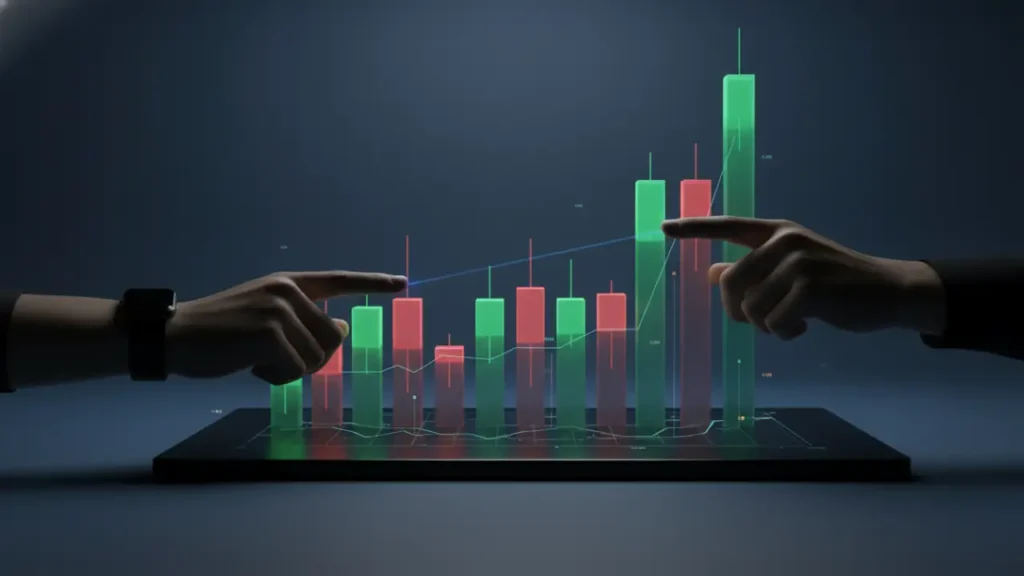
Trading ki duniya mein charts traders ki aankhein hoti hain. Agar aap bina chart padhe trading kar rahe hain, toh aap sadak par aankh band karke gaadi chala rahe hain. Line charts humein sirf closing price batate hain, lekin Candlestick Charts humein market ka poora mood, volatility aur sentiment batate hain. Har ek candle ek kahaani sunati hai—kabhi buyers ki jeet ki, toh kabhi sellers ke dominance ki.
Indian market mein, chahe wo Nifty ho ya Tata Motors, price action ko samajhne ke liye Japanese Candlesticks sabse powerful tool hain. Beginners aksar patterns ratne lagte hain, lekin unke peeche ki psychology nahi samajhte. Is guide mein hum candlesticks ko decode karenge taaki aap charts ko ek professional ki tarah padh sakein.
The Anatomy of a Candlestick
Ek single candlestick aapko chaar bohot important data points deti hai: Open, High, Low, aur Close (OHLC). Candle ki jo moti body hoti hai, wo open aur close ke beech ka difference batati hai. Jo patli lines upar aur neeche hoti hain, unhe “Wicks” ya “Shadows” kehte hain.
Wicks ka hona ye dikhata hai ki price wahan tak gaya tha, lekin wahan sustain nahi kar paya. Body ka size batata hai ki conviction kitna strong tha. Agar body badi hai, toh trend strong hai; agar body choti hai, toh market confuse hai.
| Component | Market Psychology |
| Real Body | Represents the actual battleground between bulls and bears; large body means strong momentum. |
| Upper Wick | Shows price rejection from higher levels; sellers stepped in to push the price down. |
| Lower Wick | Shows price rejection from lower levels; buyers stepped in to defend the support. |
Green vs Red: Decoding the Color War
Charts par Green (ya White) candle ka matlab hai ki market “Bullish” hai—matlab price neeche khula aur upar band hua. Buyers ne pure session mein control rakha. Red (ya Black) candle ka matlab “Bearish” hai—price upar khula lekin sellers ne use neeche dhakel diya.
Lekin sirf rang dekh kar trade lena bewakoofi hai. Kabhi-kabhi ek badi Green candle “Trap” bhi ho sakti hai agar wo resistance level par bane. Beginners ko context samajhna zaroori hai. Ek choti si Red candle uptrend mein sirf profit booking ho sakti hai, trend reversal nahi.
Power of Single Candlestick Patterns
Sabse pehle humein wo patterns samajhne honge jo sirf ek candle se bante hain. Inmein sabse popular hain “Hammer” aur “Shooting Star”. Hammer dekhne mein hathode jaisa hota hai—choti body aur neeche lambi wick.
Agar Nifty 500 points girne ke baad support par Hammer banata hai, toh iska matlab hai ki sellers thak chuke hain aur buyers ne entry le li hai. Lekin agar yahi Hammer uptrend ke top par bane, toh ise “Hanging Man” kehte hain, jo ek negative sign hai. Context hi king hai.
| Pattern Name | Formation Logic |
| Hammer | Long lower wick at support; indicates buyers absorbed all selling pressure. |
| Shooting Star | Long upper wick at resistance; indicates buyers tried to push up but failed miserably. |
| Doji | Almost no body (Open = Close); represents total indecision or a pause in the trend. |
Double Candlestick Patterns for Confirmation
Single candle kabhi-kabhi false signal de sakti hai, isliye traders “Two-Candle Patterns” par zyada bharosa karte hain. Isme “Bullish Engulfing” aur “Bearish Engulfing” sabse reliable maane jate hain.
Imagine kijiye Reliance ka stock gir raha hai (Red candle). Agle din ek badi Green candle banti hai jo pichli Red candle ko poori tarah kha jati hai (engulf kar leti hai). Ye clear signal hai ki bulls ne charge le liya hai. Intraday mein ye patterns 15-minute chart par bohot badhiya kaam karte hain.
Shutterstock
Explore
The Secret Language of Wicks
Beginners aksar sirf body dekhte hain, lekin ek pro trader “Wicks” par dhyan deta hai. Lambi wicks rejection ka sign hain. Agar aapko resistance level par baar-baar lambi upper wicks dikh rahi hain, toh samajh lijiye wahan supply zone hai aur price girne wala hai.
Isi tarah, agar kisi stock mein neeche ki taraf lambi wicks ban rahi hain, toh wahan “Demand” hai. Wicks aapko batati hain ki smart money kahan active hai. “Kangaroo Tail” pattern isi concept par based hai jahan ek bohot lambi wick stop-loss hunt karti hai aur price reverse ho jata hai.
| Wick Location | Trading Implication |
| Long Upper Wick | Strong selling pressure; suggests the uptrend is losing steam or hitting a wall. |
| Long Lower Wick | Strong buying interest; indicates dip-buying behavior by institutional players. |
| No Wicks (Marubozu) | Extreme conviction; if Green, buyers are in total control with zero selling pressure. |
Combining Candlesticks with Volume
Bina volume ke candlestick pattern dekhna bina fuel ke gaadi chalane jaisa hai. Agar ek badi Green candle banti hai lekin niche Volume bar chota hai, toh wo “Fake Breakout” ho sakta hai. Smart operators aksar price ko manipulate karte hain, lekin volume ko chupana mushkil hota hai.
Real breakout tab hota hai jab price ke saath volume bhi badhe. Agar Shooting Star (Bearish candle) bani hai aur uss waqt volume average se double hai, toh ye confirm karta hai ki heavy selling hui hai aur trend change hone wala hai. Volume hamesha pattern ka validator hota hai.
Psychology Behind Doji and Indecision
Doji ek aisi candle hai jiski body almost zero hoti hai. Iska matlab Open aur Close price same hai. Ye market mein confusion dikhata hai. Beginners galti ye karte hain ki Doji dekhte hi trade le lete hain.
Doji ka matlab reversal nahi, “Pause” hota hai. Agar market tezi se upar ja raha hai aur ek Doji banti hai, toh ho sakta hai market thoda saans le raha ho aur phir upar jaye. Doji ke baad wali candle (Follow-through candle) sabse important hoti hai decision lene ke liye.
Frequently Asked Questions
1. Which time frame is best for reading candlestick charts?
Intraday trading ke liye 5-minute aur 15-minute ka time frame sabse best maana jata hai. 1-minute chart par bohot “noise” hoti hai aur false signals milte hain. Agar aap Swing trading (holding for days) kar rahe hain, toh Daily aur Weekly charts ka use karein. Trend dekhne ke liye hamesha bade time frame se shuru karein (Top-Down Analysis).
2. Are candlestick patterns 100% accurate?
Nahi, trading mein kuch bhi 100% nahi hota. Candlestick patterns sirf probability badhate hain. Example ke liye, Bullish Engulfing ki accuracy support level par 70-80% ho sakti hai, lekin beech hawa mein (middle of nowhere) sirf 40-50% hogi. Hamesha Stop Loss ka use karein kyunki pattern fail bhi hote hain.
3. Why do candlestick patterns fail in the Indian market?
Patterns fail hone ka sabse bada kaaran hai “Operator Activity” aur “Global News”. Kabhi-kabhi technicals perfect hote hain lekin koi news aa jati hai jo chart ko invalidate kar deti hai. Iske alawa, agar aap pattern ko galat location (jaise resistance par buy signal) par trade karenge, toh wo fail hoga hi. Context is everything.
4. What is the difference between Heikin Ashi and normal Candlesticks?
Normal candlesticks real price movement dikhate hain, jo thoda noisy ho sakta hai. Heikin Ashi candles average price calculation use karti hain, jisse chart smooth dikhta hai aur noise kam ho jata hai. Trend ride karne ke liye Heikin Ashi accha hai, lekin entry-exit ke liye normal Japanese Candlesticks hi better hain kyunki wo exact price batate hain.
5. Can I trade using only candlestick patterns without indicators?
Haan, ise “Price Action Trading” kehte hain aur ye bohot effective hai. Bohot saare professional traders sirf Support/Resistance aur Candlestick patterns use karte hain. Indicators (RSI, MACD) lagging hote hain (der se batate hain), jabki candlesticks leading signals deti hain. Price action master karna indicators se zyada powerful hai.