
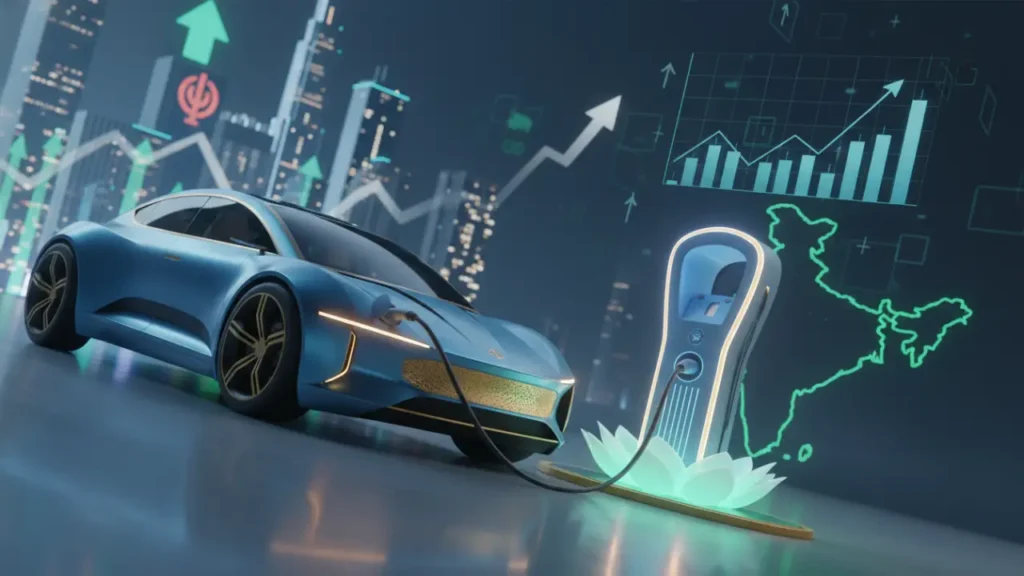
2026 mein khade hokar agar hum piche dekhein, toh Electric Vehicle (EV) revolution ab bas ek concept nahi raha, ye ek reality ban chuka hai. Sadakon par Tata ki green number plate wali gaadiyan aur Ola ke scooters ki bharmar is baat ka saboot hai ki India badal raha hai. Lekin investor ke taur par sabse bada sawal ye hai: “Kya abhi bhi train chhooti nahi hai?”
Jawab hai—bilkul nahi. EV ecosystem abhi apne “Adoption Phase” se nikal kar “Expansion Phase” mein ja raha hai. Asli paisa ab banega un companies mein jo sirf gaadiyan nahi bana rahi, balki poora ecosystem (Battery, Charging, Software) develop kar rahi hain. Is article mein hum un stocks ko decode karenge jo 2030 tak India ki mobility ko define karenge.
- Tata Motors: The Undisputed Leader
- Olectra Greentech: Revolutionizing Public Transport
- Amara Raja Energy & Mobility: The Battery Play
- JBM Auto: The Underdog in EV Buses
- Tata Power: Fueling the Revolution
- Risks in EV Sector Investment
- Portfolio Allocation Strategy
- Frequently Asked Questions
- 1. Is 2026 too late to invest in EV stocks in India?
- 2. Should I invest in pure-play EV companies or traditional auto makers?
- 3. What about investing in Lithium mining companies?
- 4. Are EV stocks overvalued right now?
- 5. Will Hydrogen fuel cells replace EVs in the future?
Tata Motors: The Undisputed Leader
Jab bhi EV ki baat hoti hai, Tata Motors ka naam sabse pehle aata hai. Inhone “First Mover Advantage” ka poora fayda uthaya hai. Nexon EV ne Indian mindset ko badal diya ki electric cars practical aur affordable ho sakti hain.
Lekin Tata Motors sirf cars tak seemit nahi hai. Inka commercial vehicle segment (Electric Buses) bhi tezi se grow kar raha hai. Tata Group ka ecosystem—Tata Power (Charging), Tata Chemicals (Battery), aur Tata Elxsi (Software)—inka sabse bada “Moat” hai. Ye vertical integration kisi aur company ke paas nahi hai.
Valuations thodi premium lag sakti hain, lekin market leader ko hamesha premium milta hai. Agar aap safe aur steady growth chahte hain, toh ye stock portfolio ka anchor hona chahiye.
| Key Strength | Why It Matters |
| Market Share | Holds 70%+ of the electric passenger vehicle market in India. |
| Ecosystem Support | Direct synergy with Tata Power and Tata Chemicals reduces dependency on outsiders. |
| Product Pipeline | Aggressive launch of 10 new EV models by 2027 keeps them ahead of competition. |
Olectra Greentech: Revolutionizing Public Transport
Public transport ka electrification private cars se zyada tezi se ho raha hai. Government ke “FAME II” scheme ke tahat, state transport corporations hazaron electric buses order kar rahi hain. Yahan Olectra Greentech ek dominant player bankar ubhra hai.
Inka tie-up China ki BYD (world’s largest EV maker) ke saath hai, jo inhe technology mein edge deta hai. Inki buses already Mumbai (BEST), Pune, aur Hyderabad ki sadakon par daud rahi hain.
Small-cap se Mid-cap banne ki journey mein ye stock bohot volatile raha hai, lekin order book massive hai. Risk yahi hai ki ye government contracts par bohot depend karte hain, jahan payments kabhi-kabhi delay hoti hain.
| Growth Driver | Impact on Stock |
| Government Orders | Huge order book from state transport units ensures revenue visibility for 3-5 years. |
| Technology Partner | Collaboration with BYD provides access to cutting-edge battery technology. |
| Capacity Expansion | New manufacturing plant in Telangana will significantly boost production capacity. |
Amara Raja Energy & Mobility: The Battery Play
Bina battery ke EV sirf ek dabba hai. Amara Raja (pehle Amara Raja Batteries) ne khud ko reinvent kiya hai. Ye sirf traditional Lead-Acid battery manufacturer nahi rahe, ab ye Lithium-Ion cells aur packs bana rahe hain.
Inhone Telangana mein apni Gigafactory setup ki hai. Battery manufacturing mein margin potential bohot high hai kyunki ye consumable item hai aur recurring revenue deta hai. EV ke alawa, Telecom aur Data Centers mein bhi energy storage ki demand badh rahi hai.
Investors ke liye ye ek “Picks and Shovels” play hai. Gaadi kisi ki bhi bike, battery ki zaroorat sabko padegi.
| Strategic Shift | Future Outlook |
| Gigafactory Setup | Massive investment in Lithium-Ion cell manufacturing to reduce imports. |
| Rebranding | Name change to “Energy & Mobility” signals a complete focus shift to new-age tech. |
| Diversification | Expanding into charging solutions and battery swapping networks. |
JBM Auto: The Underdog in EV Buses
Olectra ke baad agar koi bus segment mein aggressively kaam kar raha hai, toh wo hai JBM Auto. Ye pehle sirf auto components banate the, lekin ab full-fledged EV OEM (Original Equipment Manufacturer) ban gaye hain.
Inka “Eco-Life” electric bus series kaafi successful raha hai. JBM ka advantage ye hai ki inki manufacturing capabilities in-house hain, kyunki ye already sheet metal aur components ke expert hain. Isse cost control karne mein madad milti hai.
Valuation wise, ye Olectra se thoda sasta mil sakta hai kabhi-kabhi. Ye stock high growth potential rakhta hai lekin volatility ke liye taiyaar rehna padega.
Tata Power: Fueling the Revolution
EV khareedna aasaan hai, lekin use charge karna sabse badi chinta hai (Range Anxiety). Tata Power India ka sabse bada EV Charging network bana raha hai. Highways, Malls, aur Residential complexes mein inke chargers install ho rahe hain.
Tata Power ab sirf ek boring utility company nahi hai. Inka focus renewable energy generation par hai, jo EV ecosystem ko “Green” banata hai. Jaise-jaise EVs badhenge, charging stations ki utilization badhegi, aur wahi se asli profit aayega.
Ye stock ek defensive bet bhi hai aur growth bet bhi. Power generation ka steady business downside protect karta hai, aur EV charging upside deta hai.
| Business Vertical | EV Connection |
| Charging Network | Building the largest highway and city-wide charging infrastructure in India. |
| Renewable Energy | Supplying green power to industries and EV stations, closing the loop. |
| Home Charging | Partnering with real estate developers to install chargers in new apartments. |
Risks in EV Sector Investment
EV sector future hai, lekin iska matlab ye nahi ki risk nahi hai. Technology bohot tezi se badal rahi hai. Aaj Lithium-Ion battery chalti hai, kal Sodium-Ion ya Solid State battery aa sakti hai. Agar kisi company ne timely pivot nahi kiya, toh wo Nokia ban sakti hai.
Government subsidies (FAME) par dependency bhi ek risk hai. Agar subsidy kam hui, toh gaadiyon ke daam badhenge aur demand temporary gir sakti hai. Isliye, un companies par focus karein jo subsidy ke bina bhi profitable hone ki shamta rakhti hain.
Raw material prices (Lithium, Cobalt) global markets par depend karte hain. Supply chain disruption margins ko squeeze kar sakti hai.
Portfolio Allocation Strategy
EV stocks ko portfolio ka “Core” nahi, balki “Satellite” hissa banayein. Core portfolio mein stable large caps (Banks, FMCG) hone chahiye. EV stocks mein apne total capital ka 15-20% se zyada allocate na karein.
Diversification zaroori hai. Sirf Tata Motors lekar mat baith jaiye. Ek auto maker (Tata Motors), ek battery player (Amara Raja), aur ek infrastructure player (Tata Power) ka mix banayein. Isse agar ek segment slow bhi ho jaye, toh dusra balance kar dega.
Lumpsum investment se bachein. Ye sector volatile hai. Har dip par accumulate karein (SIP mode) aur kam se kam 5 saal ka nazariya rakhein.
Frequently Asked Questions
1. Is 2026 too late to invest in EV stocks in India?
Bilkul nahi. India mein EV penetration abhi bhi single digits mein hai (Cars < 2%, 2-Wheelers ~5%). S-Curve adoption theory ke hisaab se, hum abhi bas takeoff point par hain. Asli mass adoption agle 5 saalon mein hoga jab affordable models aayenge. Abhi enter karna early majority phase mein enter karna hai.
2. Should I invest in pure-play EV companies or traditional auto makers?
Traditional companies (Tata, Mahindra) safe hain kyunki unka ICE (Petrol/Diesel) business cash flow deta hai jo EV expansion ko fund karta hai. Pure-play startups (like Ola Electric) risky hain kyunki wo cash burn kar rahe hain. Beginners ke liye established players safer bet hain.
3. What about investing in Lithium mining companies?
India mein direct Lithium mining companies list nahi hain (kuch PSUs explore kar rahi hain). Indirect exposure ke liye aap chemical companies (jaise Himadri Speciality Chemical) dekh sakte hain jo battery materials (Anode/Cathode) banati hain. Ye battery supply chain ka critical hissa hain.
4. Are EV stocks overvalued right now?
Kuch stocks P/E wise mehenge lag sakte hain (e.g., Olectra, JBM). Lekin growth stocks mein P/E se zyada PEG (Price/Earnings to Growth) ratio dekha jata hai. Agar earnings 40-50% se grow kar rahi hain, toh high P/E justify ho jata hai. Valuation expensive hai, lekin growth usse bhi tez hai.
5. Will Hydrogen fuel cells replace EVs in the future?
Hydrogen technology abhi nascent stage par hai aur mostly heavy commercial vehicles (Trucks) ke liye suitable maani ja rahi hai. Passenger cars aur 2-wheelers ke liye Battery EV (BEV) hi dominant technology rahegi agle 10-15 saal tak. Dono technologies co-exist karengi, replace nahi.